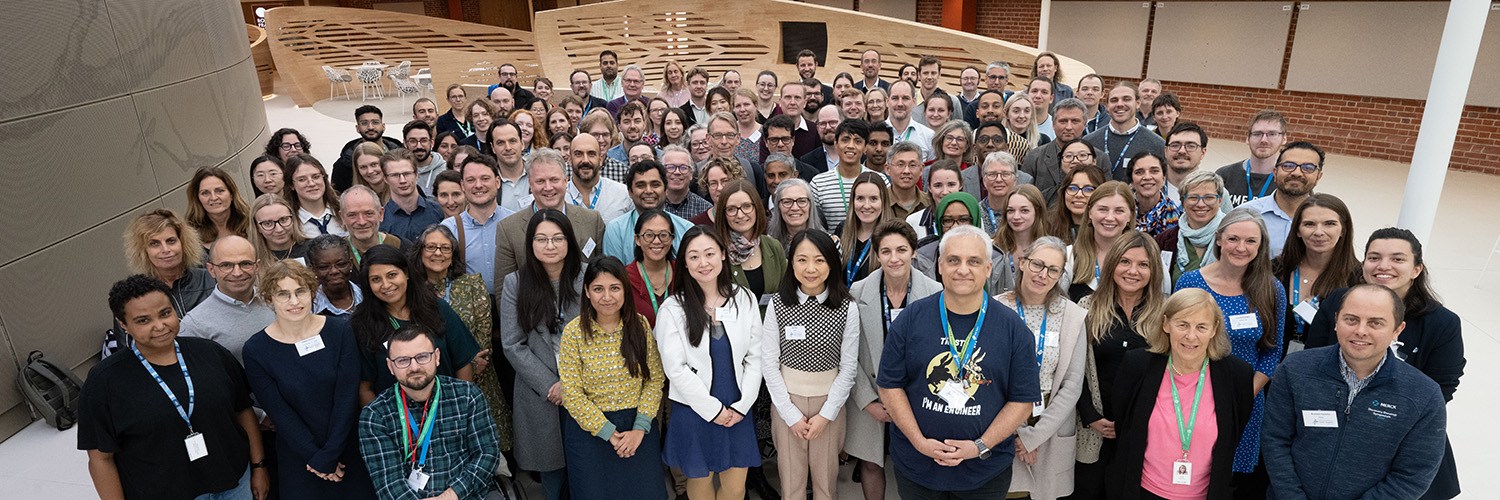
 The Open Targets team at our 10 year anniversary celebration in October 2024
Join our team!
Open Targets is based on the stunning Wellcome Genome Campus, home to some of the world's foremost institutes and organisations in genomics and computational biology. We work in dynamic teams at the interface of academic and pharma industry science on a crucial problem, how to be more successful in making drugs. Working with us, you will be exposed to new technologies and a dynamic set of scientists dedicated to translational research.
Our posts are usually in either one of our academic partners, The Wellcome Sanger Institute or EMBL-EBI and have terms and conditions associated with the employer.
Important note: applications may be reviewed on an ongoing basis and the advertised post(s) may be filled before the stated deadline.
Scientific Developer (Chemical Biology Resources)
Application closing date: 11 October 2026

Harness modern machine learning techniques to extract data from a range of relevant resources, such as clinical trials, publications and drug labels, as part of the Open Targets Safety 2.0 project.
Safety and toxicology concerns remain one of the most persistent challenges in drug discovery. The Open Targets Safety 2.0 project will develop a comprehensive open source side effect resource for the scientific and pharmaceutical community, and provide structured and standardised training sets for AI/ML applications to improve early identification of safety liabilities.
You will work closely with team members to ensure development of automated pipelines and effective integration into the ChEMBL database and Open Targets Platform, to assist users in the selection of safe and efficacious drug targets.